
Table of Contents
ToggleIndoor plants won’t thrive in the same soil you’d use for outdoor gardens. Standard garden soil compacts indoors, traps too much moisture, and suffocates roots, which is why most houseplants fail before they’ve had a real chance. The secret isn’t a miracle fertilizer or fancy pot: it’s the right soil mix. A quality indoor plant soil provides drainage, aeration, and the right balance of water retention, all tailored to the plant’s specific needs. Whether growing succulents, tropical plants, or low-light office specimens, understanding soil composition makes the difference between a drooping plant and one that actually flourishes. This guide breaks down what makes indoor plant soil work and gives proven recipes for common houseplant types.
Key Takeaways
- Standard garden soil compacts indoors and traps excess moisture, causing root rot and fungal issues—the best soil mix for indoor plants requires a lighter, airier blend designed specifically for containers.
- Quality indoor plant soil combines three essential components: a moisture-retaining base (peat moss or coco coir), an aerating agent (perlite or vermiculite), and compost or bark for structure and nutrients.
- Different houseplant types thrive with tailored soil recipes, such as high-drainage succulent mixes (40% perlite), moisture-loving mixes (20% vermiculite), and orchid-specific mixes (70% orchid bark).
- Most houseplants need a soil refresh every 1–2 years as peat compacts and bark decays; partial refreshes work for healthy plants, while full repotting is best for larger containers or drainage problems.
- Commercial indoor plant mixes typically cost $8–$15 for 8–10 liters and work well for tropical houseplants, but mixing your own batches and storing them in labeled bulk containers offers flexibility and cost savings.
Why Standard Garden Soil Doesn’t Work For Indoor Plants
Outdoor garden soil is heavy. It’s designed to hold nutrients and moisture for in-ground plants with extensive root systems and consistent water cycling from rain and evaporation. Indoors, that same soil becomes a problem. In a pot, it compacts easily, reduces airflow around roots, and drains poorly, even though it might feel well-draining when wet.
Indoor containers also lack the natural drainage of open soil. Water sits longer in pots, and excess moisture has nowhere to go. Heavy soil trapped in a pot creates anaerobic conditions (low oxygen), which causes root rot and fungal issues. Garden soil’s clay and silt content also makes it harder for you to adjust moisture or feeding, since the soil itself holds so much water that controlling how often to water becomes a guessing game.
Pot-bound roots need lighter, airier substrate. Indoor plant soil should dry out somewhat between waterings, not stay waterlogged. That’s why commercial indoor plant mixes and DIY recipes rely on components that improve drainage and prevent compaction, not heavy field soil.
The Essential Components Of Quality Indoor Plant Soil
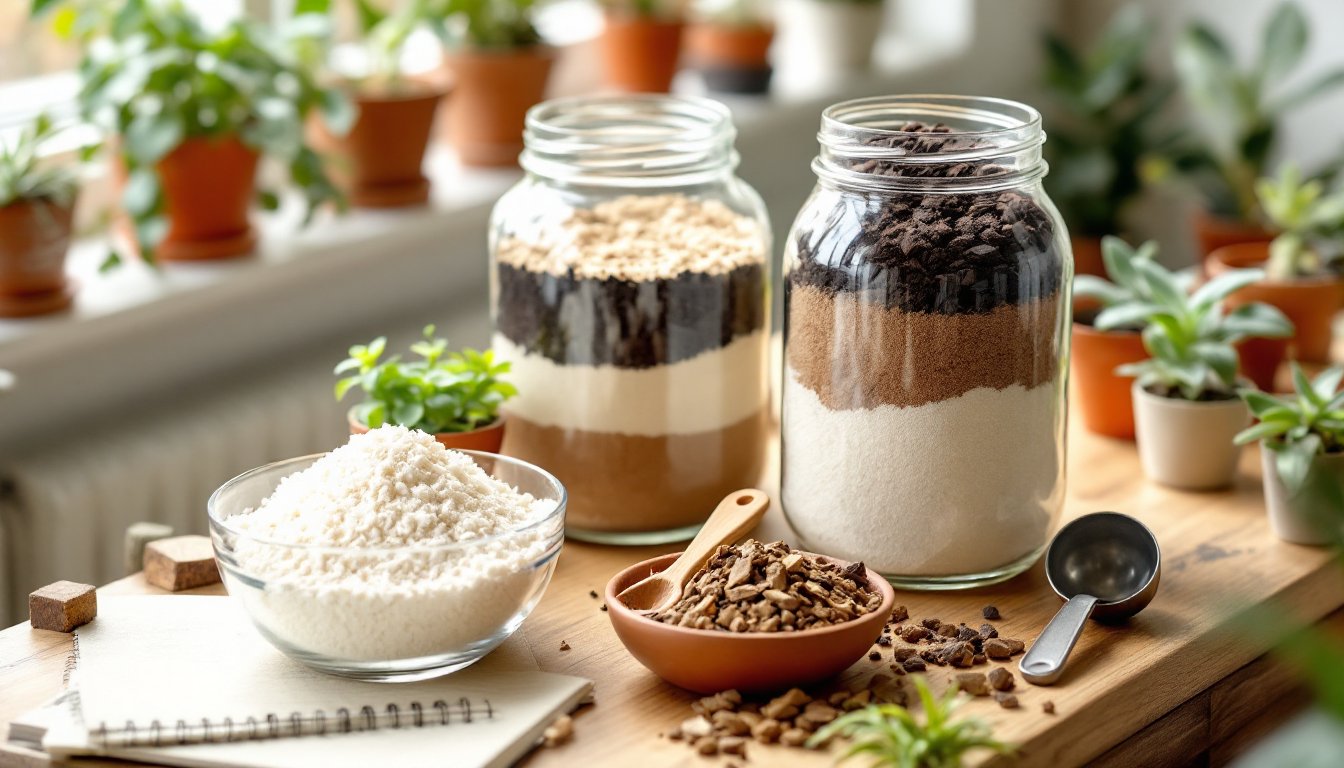
A good indoor plant soil is a blend, not a single ingredient. The three main components are a moisture-retaining base (like peat or coco coir), an aerating agent (perlite or vermiculite), and often compost or bark for structure and nutrients. Understanding each piece helps when you’re mixing your own or choosing a commercial blend.
Peat Moss And Peat Alternatives
Peat moss has been the standard for decades. It holds water and nutrients well, has a low pH, and breaks down slowly, maintaining structure over time. A 50-liter bag of peat moss costs around $15–$25 depending on quality and region. But, peat extraction depletes wetland ecosystems, so many gardeners now prefer alternatives.
Coco coir (coconut husk fiber) is the most common peat replacement. It holds moisture similarly to peat, is renewable, and doesn’t affect pH as much. Fair-trade sourcing ensures sustainable harvesting. Sphagnum moss (different from peat) is finely structured and excellent for orchids and humidity-loving plants but costs more. For general use, coco coir mixed with composted bark is a solid peat-free base. These alternatives slightly raise soil pH compared to peat, which matters for acid-loving plants like azaleas (they prefer pH 4.5–6.0), but works fine for most common houseplants (which tolerate pH 5.5–7.0).
Perlite, Vermiculite, And Aeration
Perlite is expanded volcanic glass, those white, puffy bits you see in potting soil. It’s inert, won’t decompose, and creates air pockets that stay open over years. Perlite improves drainage and prevents compaction. Use 20–40% perlite in mixes for succulents: 10–20% for tropical houseplants.
Vermiculite is expanded mica mineral. Unlike perlite, it holds water and nutrients, releasing them slowly. It’s best for moisture-loving plants (ferns, calathea) rather than succulents. Vermiculite can compact over time if used alone, so combine it with perlite or bark for long-term structure.
Bark (orchid bark or composted pine bark) adds structure, improves drainage, and resists compaction for 2–3 years before needing refresh. It’s ideal for orchids, aroids, and plants that prefer chunky, open media. Many growers use bark instead of perlite in aroid mixes because it degrades predictably and can be fully replaced every few years.
Proven Soil Mix Recipes For Different Plant Types
Here are four tested mixes covering most common indoor houseplants. Adjust ratios slightly based on your home’s humidity, watering habits, and how quickly pots dry.
Universal Tropical Mix (philodendrons, pothos, monstera, snake plants):
- 50% peat moss or coco coir
- 25% perlite
- 20% compost or composted bark
- 5% worm castings or slow-release fertilizer
This mix holds moisture but drains fast enough that weekly watering works without risk of rot.
High-Drainage Succulent Mix (jade, echeveria, aloe):
- 40% coco coir or peat
- 40% perlite or coarse sand
- 20% orchid bark or pumice
Succulents store water in leaves, so soil should dry quickly. If your home is dry, increase perlite to 50%. If you tend to water frequently, stick with 40% perlite max.
Moisture-Loving Mix (ferns, calathea, rex begonias):
- 50% peat or coco coir
- 20% vermiculite
- 20% compost
- 10% perlite
This mix retains moisture longer while vermiculite releases nutrients gradually. Check soil before watering: these plants like consistent (not soggy) moisture.
Orchid-Specific Mix (Phalaenopsis, Dendrobium):
- 70% orchid bark (medium or fine grade)
- 20% sphagnum moss
- 10% perlite
Orchids need chunky, open media that drains instantly and allows air around roots. Bark-based mixes should be refreshed every 2–3 years when bark begins breaking down.
For starter mixes, commercial “indoor plant soil” or “houseplant potting mix” from established brands usually hits the tropical zone well and costs $8–$15 for 8–10 liters. Check the label: look for ingredients listing peat or coir, perlite, and compost rather than a mystery “bark blend.”
How To Amend And Refresh Your Indoor Plant Soil
Over time, indoor plant soil breaks down. Peat compacts, bark decays, and drainage slows. Most houseplants in 6–8 inch pots need a soil refresh every 1–2 years: larger plants and orchids every 2–3 years.
Partial refresh works for healthy plants. Remove the top 2–3 inches of old soil and replace it with fresh mix. This maintains the plant’s root ball while removing compacted surface soil.
Full refresh is best when repotting into a slightly larger pot or addressing drainage issues. Gently remove the plant, loosen the root ball slightly with your fingers (don’t tear roots), and pot into fresh soil. If roots are circling the bottom, carefully tease them apart before replanting. Water lightly after repotting to settle soil: don’t fertilize for 4–6 weeks, since fresh soil usually contains some nutrients.
If you mix your own batches, store peat or coir in airtight bins away from moisture. Perlite and bark stay dry indefinitely. Pre-mix components in bulk and store in 5-gallon buckets, labeling by recipe. This saves time when repotting multiple plants. Keep notes on which mixes work best for your plants and adjust next year if drainage or water retention didn’t feel right.
Conclusion
The best soil mix for indoor plants balances moisture retention with aeration, something garden soil simply can’t do. Whether buying pre-made mixes or blending your own, focus on a lightweight base (peat or coco coir), an aerating agent (perlite or bark), and compost for structure. Different plant types benefit from slightly different recipes, but the principle stays the same: create an open, draining medium that keeps roots happy. Refresh soil every 1–2 years, monitor how quickly pots dry, and adjust your recipe next season if needed. With the right soil foundation, most houseplants thrive with basic care.