
Table of Contents
ToggleCoffee grounds, the byproduct sitting in the filter after morning brew, are far more valuable than the trash bin suggests. For indoor plant enthusiasts, they’re a nitrogen-rich soil amendment that costs almost nothing and delivers measurable results. Rather than tossing used grounds, savvy gardeners have been repurposing them for years to feed plants, improve soil structure, and fine-tune pH levels. This practical approach works especially well for indoor potted plants, where controlled feeding and soil conditions matter most. The trick is understanding which plants benefit most and applying grounds correctly so mold and salt buildup don’t become problems.
Key Takeaways
- Coffee grounds are a nitrogen-rich, cost-free soil amendment that improves indoor plant health when applied correctly and in moderation.
- Acid-loving plants like azaleas, African violets, ferns, and gardenias thrive with coffee grounds, while succulents and cacti should be avoided since they prefer lean, neutral soil.
- Apply coffee grounds safely by using no more than 1/4 to 1/2 inch per application during the growing season, or mix them into fresh potting soil at a 1:8-10 ratio when repotting.
- Over-application of coffee grounds causes salt and nitrogen buildup that damages roots, so monthly applications or seasonal repotting is ideal rather than frequent feeding.
- Brewed coffee tea—made by steeping grounds in water for 24 hours—offers a gentler application method for sensitive plants or smaller pots without visible soil residue.
How Coffee Grounds Benefit Your Indoor Plants
Coffee grounds deliver three main advantages to indoor plants: nitrogen content, soil structure improvement, and pH adjustment. Spent grounds contain roughly 2% nitrogen by weight, a critical macro-nutrient plants need for leafy growth and photosynthesis. Unlike synthetic fertilizers, grounds release nitrogen slowly as they decompose, reducing the risk of burn and providing steady feeding over weeks.
Ground coffee also improves soil texture. When mixed into potting soil, grounds add organic matter that increases water retention without creating compaction. This is especially useful in sandy, fast-draining mixes where water runs through too quickly. They also attract earthworms and beneficial microbes that aerate soil and break down organic material, essential for healthy root systems in contained pots.
Finally, coffee grounds are slightly acidic (pH around 5.0–5.5). For acid-loving plants, this gradual pH shift can mean the difference between vibrant growth and stunted foliage. But, this same property makes them unsuitable for plants preferring neutral or alkaline conditions. Know your plant before adding grounds: not every greenery will appreciate the change.
Best Plants That Thrive With Coffee Ground Applications
Acid-Loving Plants
Azaleas, blueberry plants, and gardenias are prime candidates for coffee ground feeding. These species naturally grow in acidic forest soils and respond dramatically to the mild acid boost grounds provide. African violets, a popular indoor favorite, benefit from the gentle nitrogen boost and prefer slightly acidic conditions. Rhododendrons, when kept indoors or moved to patios seasonally, thrive with regular coffee ground additions.
Heathers and ericas are smaller acid-lovers that perform well in containers with coffee ground-amended soil. If growing camellias indoors (possible in bright, cool rooms), grounds are a near-perfect match. The nitrogen supports blooming, and the acidity maintains soil chemistry these plants expect. Even ferns, which prefer moist, acidic conditions, respond positively to a light coffee ground mulch layered onto soil.
Other Compatible Indoor Plants
Beyond acid-specialists, many common houseplants tolerate and benefit from coffee grounds. Philodendrons, monstera, and pothos aren’t strict acid-lovers, but they accept slightly acidic soil without complaint and appreciate the organic matter and nitrogen. Snake plants and ZZ plants are more forgiving: they handle coffee grounds but don’t require them since they prefer drier conditions.
Begonias, impatiens, and caladiums respond well to moderate coffee ground applications. These shade-loving tropicals naturally inhabit forest understories where acidic, organic-rich soil is the norm. Citrus plants grown indoors (lemons, limes) benefit from both the nitrogen for leaf growth and the mild acidity that supports fruit production. But, avoid adding grounds to succulents and cacti, these desert-origin plants prefer lean, neutral soil and excess organic matter invites rot.
How To Use Coffee Grounds Safely and Effectively
Application Methods
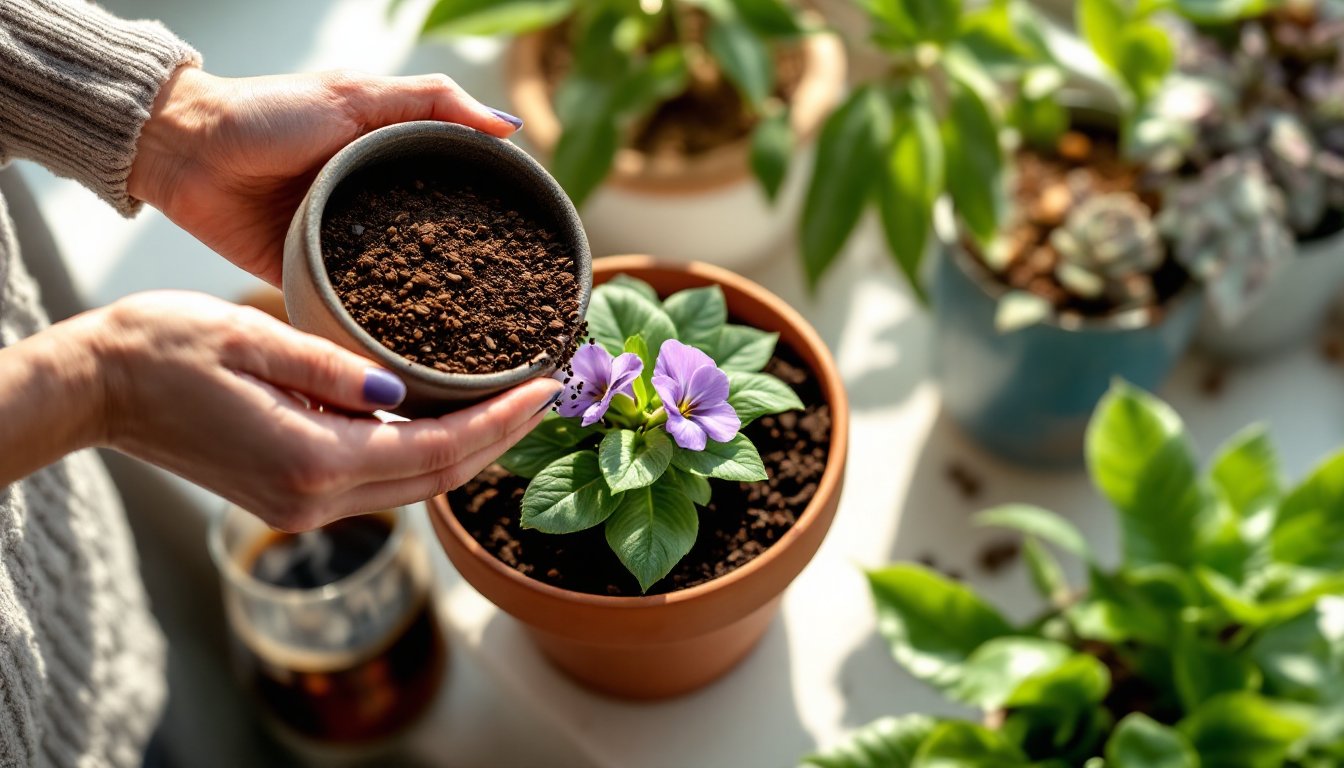
Dry Application: The simplest method is sprinkling dried grounds directly onto soil surface and scratching them in gently with your finger or a small tool. Use no more than 1/4 to 1/2 inch of grounds per application, spread evenly around the base. Water afterward to start decomposition. Repeat monthly or every six weeks for established plants.
Composting Into Potting Mix: When repotting (typically once yearly or every two years), mix spent grounds into fresh potting soil at a ratio of roughly 1 part grounds to 8-10 parts soil by volume. This distributes nitrogen evenly and prevents clumping. Wet the grounds slightly before mixing so they bind better and don’t float to the surface.
Brewed “Coffee Tea”: Steep dried grounds in water for 24 hours, strain, and use the liquid as fertilizer. This method is gentler than direct application and works well for sensitive plants or those in smaller pots where solid material might accumulate. A single batch can feed multiple plants and won’t create visible residue on soil.
Frequency and Timing: Apply coffee grounds during the growing season (spring through early fall) when plants are actively using nutrients. Reduce or stop applications in winter when most houseplants slow down. Overfeeding with nitrogen causes soft, weak growth susceptible to pests.
Always use completely cooled grounds from unflavored coffee, never apply hot or fresh grounds to soil. Check that grounds are fully dried before storage to prevent mold. If grounds smell rotten or show visible mold, discard them.
Common Mistakes To Avoid
Over-application is the biggest pitfall. Adding more than 1/2 inch of grounds at once or applying weekly creates salt and nitrogen buildup that damages roots. If you notice a crusty surface layer or smell ammonia from the pot, you’ve overdone it. Flush the soil with water or repot with fresh mix.
Using coffee with additives (flavored syrups, cream residue, sugar) invites pest problems and fungal growth. Stick to plain black coffee grounds only. Similarly, grounds from coffee with mold or a sour smell should never go near plants, contaminated organic matter spreads issues fast in the enclosed pot environment.
Ignoring drainage and mold risk is another trap. Coffee grounds retain moisture, which is good, but only if pots drain freely. If your pot lacks drainage holes or soil is already waterlogged, adding grounds makes root rot inevitable. Ensure pots have 1-inch drainage holes at the base and that water runs through in a few seconds. If grounds smell musty in the bag, they’ve already begun breaking down anaerobically, pitch them.
Applying to wrong plant types wastes effort. Succulents, cacti, and plants adapted to alkaline soils (like lavender or ornamental grasses indoors) don’t benefit and often decline. Check your plant’s origin before amending soil. When unsure, a light monthly application of coffee tea (rather than solid grounds) is a safer test.
Forgetting that code varies by context doesn’t apply here, but mixing old grounds with fresh potting soil without measuring ratios often results in inconsistent feeding. A simple rule: if you can’t see individual soil particles between grounds, it’s too concentrated. Your eye is a good tool for judgment.
The Bottom Line: Free Fertilizer That Works
Coffee grounds aren’t a complete plant food, they’re a supplement best paired with occasional balanced fertilizer during the growing season. What makes them valuable is cost, availability, and the fact they improve soil over time while delivering steady nitrogen release. For acid-loving plants like azaleas, ferns, and African violets, they’re nearly ideal. For general houseplants, they’re a safe, forgiving addition. The key is moderation: light applications monthly or mixed into fresh soil during repotting, never heavy applications or frequent feeding. Start small, watch how your plants respond, and adjust. That’s the DIY approach that works.