
Table of Contents
ToggleHydroponic plants have moved from laboratory curiosity to practical home solution. Unlike traditional gardening, hydroponic growing delivers nutrients directly to plant roots through water, no soil required. For indoor growers, this means year-round harvests, compact growing spaces, and faster plant growth compared to soil-based methods. Whether someone’s working with a 2×4-foot basement corner or a sunny windowsill, hydroponic systems adapt to available space and climate. This guide covers everything needed to start growing hydroponic plants indoors successfully, from equipment selection to troubleshooting common issues.
Key Takeaways
- Hydroponic plants grow 30–50% faster than soil-based plants because roots access nutrients directly from water, with zero soil-borne diseases or pests.
- Indoor hydroponics systems use up to 90% less water than traditional gardens while enabling year-round harvests in minimal space.
- Deep Water Culture (DWC) is the best starting system for beginners, requiring just one bucket, one pump, and minimal maintenance for leafy greens like lettuce and spinach.
- LED grow lights delivering 30–40 watts per square foot for 14–16 hours daily are essential for successful hydroponic plants indoors, as natural window light is rarely sufficient.
- Maintain pH levels between 5.5–6.5 and monitor electrical conductivity (EC) at 1.2–1.8 using affordable digital meters to prevent nutrient lockup and overfertilization in your hydroponic system.
- Common issues like algae, root rot, and yellowing leaves are preventable through consistent aeration, light blocking, proper pH management, and keeping detailed growing logs.
What Are Hydroponic Plants and Why Grow Them Indoors?
Hydroponic plants grow in nutrient-rich water solutions instead of soil, allowing roots to absorb everything they need directly from the liquid medium. This method isn’t new, it’s been used commercially for decades, but home systems have become affordable and reliable enough for serious DIYers.
Indoor hydroponics offers real advantages. Plants grow 30–50% faster because roots access nutrients on demand without searching through soil. There’s no soil-borne disease or pest pressure, which means fewer fungal issues, root rot from overwatering, or surprise infestations. For apartment dwellers or those with limited outdoor space, hydroponic systems occupy a fraction of the footprint needed for traditional gardens while producing higher yields per square foot.
Water usage drops dramatically too, hydroponic systems recirculate water instead of letting it drain away, using up to 90% less water than soil gardens. In dry climates or drought-prone regions, this efficiency matters. Year-round growing is possible indoors under controlled lighting and temperature, independent of seasons or outdoor weather.
Essential Equipment and Systems for Indoor Hydroponics
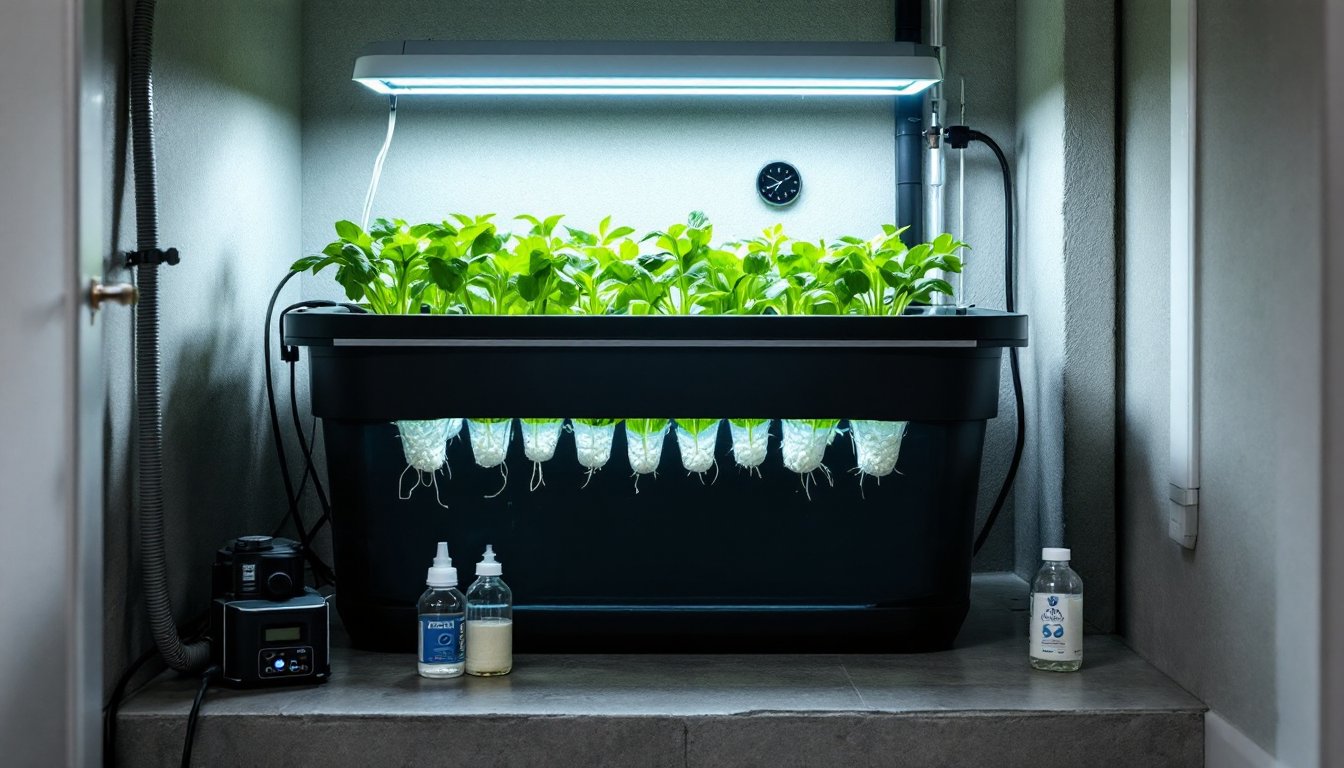
Getting started requires a few core components: a growing container or tank, a pump and air stone (for recirculating systems), growing medium to anchor roots, electrical timer, and pH testing kit. Containers range from a simple 5-gallon bucket to commercial-grade plastic reservoirs. Most hobbyists find a 20–50 gallon food-grade plastic reservoir strikes the balance between capacity and manageability.
The pump circulates nutrient solution and oxygenates the water, stagnant water becomes anaerobic and kills roots. An aquarium air pump with tubing and an air stone work for small systems: larger setups need a submersible water pump (500–1000 GPH is typical for home systems). A simple 24-hour mechanical or digital timer cycles the pump on and off, preventing root drowning in flood-and-drain systems.
Growing mediums replace soil’s structural role. Expanded clay pellets, rockwool, perlite, or coconut coir each have trade-offs. Clay pellets are reusable and support heavy plants: rockwool drains quickly but holds water well for seedlings: perlite is light but less stable: coconut coir mimics soil properties but breaks down over time. Most beginners start with clay pellets or rockwool cubes.
Choosing the Right Hydroponic System
Five main system types suit home growers. Deep Water Culture (DWC) suspends roots directly in oxygenated nutrient solution, the simplest, cheapest option for lettuce and leafy greens. Ebb and Flow (or flood-and-drain) periodically floods a tray, then drains back to the reservoir, working well for herbs and smaller fruiting plants. Nutrient Film Technique (NFT) runs a thin film of nutrient solution down a channel, water-efficient but demanding on pump timing.
Drip systems deliver solution to each plant via tubing, forgiving and scalable for mixed crops. Aeroponics mists roots with nutrient solution in air, fastest growth but finicky plumbing. For beginners, DWC is unbeatable: one bucket, one pump, minimal fuss. Aim for a system with a 15–20 gallon net pot capacity for first attempts.
Best Plants to Grow Hydroponically Indoors
Not every plant thrives in water. Leafy greens and herbs love hydroponic conditions because they’re shallow-rooted and don’t demand heavy nutrient loads. Lettuce, spinach, arugula, and kale mature in 30–40 days under decent lighting and are nearly foolproof. Basil, mint, cilantro, and parsley grow vigorously and tolerate beginner mistakes.
Tomatoes, peppers, and cucumbers work in hydroponic systems but need taller growing spaces, stronger root anchoring (dense growing medium), and more consistent nutrient management. They fruit faster than in soil, sometimes 2–3 weeks earlier, but require adequate light (at least 14–16 hours daily) and steady feeding schedules.
Avoid plants with deep taproots like carrots, beets, and parsnips unless using a deep reservoir setup. Root vegetables and hard-to-oxygenate systems clash. Similarly, large fruiting plants like melons or squash need robust structural support and substantial water volume.
Start with a mixed crop: 3–4 lettuce or spinach plants plus 2–3 basil plants in a beginner DWC system. Success builds confidence, and you’ll harvest edible results within six weeks. Once that works smoothly, scale up or try more demanding crops.
Lighting, Nutrients, and Water Quality Essentials
Indoor hydroponic plants depend entirely on artificial lighting, there’s no compromise here. Natural window light rarely provides enough intensity (measured in lumens or PAR watts). LED grow lights have become the standard: they’re efficient, produce less heat than older HPS bulbs, and last 50,000+ hours. Plan for 30–40 watts per square foot of growing area for leafy greens, 50+ watts for fruiting plants.
Position lights 12–18 inches above seedlings, adjusting as plants grow. A simple 24-hour timer ensures consistent photoperiods, most vegetables need 14–16 hours of light daily. Darkness allows plants to respire and recover: total 24-hour lighting burns them out.
Nutrients come in three-part solutions (nitrogen, phosphorus, potassium in separate bottles) or two-part mixes (general-purpose formulations). Follow package dilution rates closely, overfertilizing causes salt buildup, which blocks nutrient uptake. Change reservoir solution every 2–3 weeks, or test and top up between changes if starting out.
Managing pH and Electrical Conductivity
pH measures acidity: most plants prefer 5.5–6.5 in hydroponic systems. Below 5.5, nutrients lock up: above 7.0, they precipitate out and become unavailable. Test twice weekly with an inexpensive digital pH meter (±0.1 accuracy, around $25). Adjust with pH Up (potassium hydroxide) or pH Down (phosphoric acid), add small amounts (1–2 mL per 5 gallons) and retest after 15 minutes.
Electrical Conductivity (EC) or TDS (Total Dissolved Solids) measures nutrient concentration. Most vegetables grow well at EC 1.2–1.8 (or roughly 800–1200 ppm). A $15–30 EC/TDS meter catches overfertilization before it damages crops. If EC climbs above 1.8, dilute with distilled or deionized water. This constant feedback prevents common mistakes and keeps yields consistent.
Common Challenges and How to Troubleshoot Them
Algae growth thrives under light and in nutrient-rich water. Block light from reaching the reservoir using opaque covers or wrapping tubing with foil. Change water regularly and clean the tank between crops. A thin layer of algae won’t crash a system, but it consumes nutrients and competes with plants.
Root rot signals low oxygen or contaminated water. Check that the air pump runs continuously and stones aren’t clogged. If roots smell sulfurous or turn brown-black, drain the tank, scrub it with a dilute bleach solution (1:10 ratio), rinse thoroughly, and start fresh. This is why aeration isn’t optional.
Yellowing leaves often mean nutrient deficiency or pH lockup. Test pH first, if it’s stable at 5.5–6.5 and EC is adequate, a partial water change usually fixes it. Nitrogen deficiency shows as yellow lower leaves: potassium deficiency appears as yellowing leaf edges. Add a small nutrient boost and observe over 3–5 days.
Wilting even though wet roots suggests temperature stress or root disease. Hydroponic systems work best at 65–75°F. Water over 75°F loses dissolved oxygen: below 60°F, nutrient uptake slows. A simple aquarium heater ($20–40) stabilizes temperature and prevents shock.
Pest infestations are rarer indoors than outdoors, but aphids, spider mites, and whiteflies still appear, especially if doors open frequently. Inspect new plants before adding them to the system. A spray of insecticidal soap or neem oil kills soft-bodied insects: follow label instructions and allow drying time before harvesting. Quarantine infected plants away from the system.
Keep a simple log: pH, EC, temperature, water changes, and what you fed the plants. After two or three crops, patterns emerge, you’ll know exactly what works for your space and climate.