
Table of Contents
ToggleAir plants have earned a reputation as nearly care-free houseplants, and for good reason, they grow without soil. But “low-maintenance” doesn’t mean “no-maintenance,” and watering is where many air plant owners stumble. These plants pull moisture and nutrients from the air and water, not soil, which means their water needs work differently than typical houseplants. Getting the watering schedule right is the difference between a thriving, green plant and one that turns brown and brittle. This guide walks through how often to water air plants, what affects their moisture needs, and how to spot the warning signs before it’s too late.
Key Takeaways
- Water air plants once per week by soaking them for 20–30 minutes, as they absorb moisture through leaves rather than soil roots.
- Seasonal and environmental factors matter: increase watering frequency to 3–4 times per week in spring and summer, and reduce to every 10–14 days in fall and winter.
- Watch for under-watering signs like curled, papery leaves and over-watering signs like soft dark spots near the base, which indicate rot.
- Always shake off excess water and let your air plant air-dry completely in an upright position to prevent moisture-trapping and fungal rot.
- Humidity, light exposure, air circulation, and plant species all affect how often to water air plants—misting alone is insufficient without periodic soaking.
Why Air Plants Need Water (It’s Not What You Think)
Air plants (Tillandsia species) don’t grow in soil because their roots don’t need to pull nutrients from it. Instead, they’re epiphytes, in nature, they grow on trees and rocks, drawing water and minerals directly from rain and moisture in the air. The roots on an air plant primarily serve to anchor it to a surface, not to feed it. This fundamental difference means traditional watering rules don’t apply.
When you water an air plant, you’re mimicking rainfall. The plant absorbs moisture through tiny structures on its leaves called trichomes, which capture water and nutrients. Without regular water, these trichomes can’t function properly, and the plant dries out from the inside. But, air plants are also vulnerable to rot if they stay too wet for too long, especially around their base. The balance is narrower than with soil plants, which is why understanding frequency matters so much.
The Standard Watering Schedule
Typical Weekly Guidelines
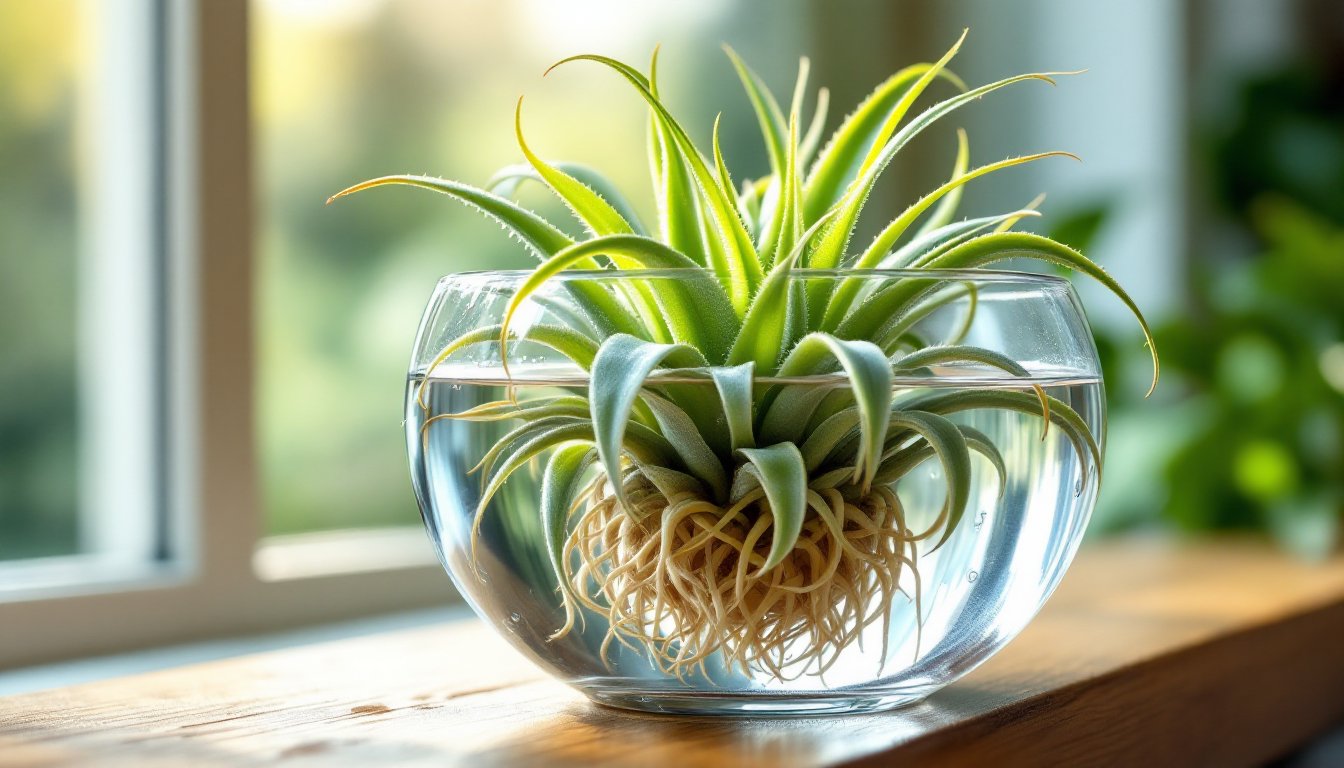
The most reliable rule is to water your air plant once per week, usually by soaking or misting. For a weekly soak, submerge the entire plant in room-temperature water for 20–30 minutes. Remove it, gently shake off excess water, and let it air-dry upside down or on its side for at least 2–4 hours before returning it to its display. This mimics a good rainfall and ensures water reaches all the trichomes.
Misting alone is less effective than soaking. If you mist, do it 2–3 times per week to compensate, applying water until the plant is visibly wet. Misting works best in humid climates and for plants on display where soaking isn’t practical. Either way, the goal is to wet the entire plant, including the inside of any leaves or leaf clusters.
Seasonal Adjustments
Air plants’ water needs shift with temperature and humidity. In spring and summer, when growth is active and indoor air is often drier from air conditioning, stick to weekly soaking or increase misting frequency to 3–4 times per week. Fall and winter are different, growth slows, and in cooler environments, evaporation decreases. Many growers cut back to soaking every 10–14 days during winter months or in naturally humid climates.
If you live in a humid region (coastal areas, tropical climates), reduce frequency slightly because the air already holds moisture. Conversely, dry climates and heated homes demand more frequent watering. Arid regions may require weekly soaking plus occasional misting on drier days.
Factors That Affect Watering Frequency
Several practical conditions change how often you’ll water:
Humidity and climate. Low humidity (below 50%) dries out air plants faster. Heated homes in winter, air-conditioned offices, and arid climates all reduce moisture in the air. Conversely, kitchens and bathrooms with steam naturally boost humidity.
Light exposure. Brighter, indirect light increases the plant’s metabolic activity and water use. A plant in a dim corner will dry slower than one near a window.
Air circulation. Good airflow helps the plant dry after watering, reducing rot risk. Poor ventilation (like a closed glass case) traps moisture and invites fungal issues.
Water quality. Chlorinated tap water is fine, but some tap water in mineral-heavy areas may leave deposits on leaves. Filtered, distilled, or rainwater is ideal and won’t leave white residue.
Plant species. While most common tillandsias follow the weekly rule, larger varieties like Tillandsia xerographica and Tillandsia cyanea are more forgiving, while smaller varieties like Tillandsia ionantha dry faster and may need soaking twice per week in hot months. Check the specific variety if you’re unsure.
Signs Your Air Plant Needs Water
Learn to read your plant. Healthy air plants are firm and bright green (or gray-green, depending on variety). Their leaves feel plump and flexible.
An under-watered air plant shows clear distress signals: leaves curl inward, turn pale or silvery-gray, lose their flexibility, and feel papery. If you notice this, soak the plant immediately for 30–45 minutes, and it should perk up within a few hours to a day. Persistent curling and browning on leaf tips often mean chronic under-watering.
Over-watering signs are different and harder to reverse. Black or dark brown spots that are soft to the touch (especially near the base) indicate rot, which starts from too much water and poor drying. A mushy, smelly base is a red flag, that plant may not survive. Prevention is easier than a cure here.
Take a moment to feel your air plant before watering. If the leaves feel soft and the base is damp or cool, skip the soak and check again in a few days.
Common Watering Mistakes To Avoid
Most air plant deaths come from one of these patterns:
Leaving standing water on the plant. After soaking or misting, water trapped in leaf clusters or around the base causes rot. Always shake off excess water and let the plant air-dry fully in an upright or tilted position. Don’t place it on a closed surface right after watering.
Using cold water. Always use room-temperature (or slightly warm) water. Cold water can shock the plant’s system.
Watering with no regard to airflow. If your air plant is in a terrarium, glass case, or sealed display with no ventilation, it’s almost impossible to prevent rot, water stays trapped. Air plants don’t belong in closed terrariums unless you’re very deliberate about opening it to dry daily.
Misting only, forever. Misting alone doesn’t deliver enough water for most air plants. It’s a supplement, not a substitute for soaking. A plant that’s misted weekly without soaking will slowly desiccate.
Ignoring humidity. In very dry homes, watering frequency alone won’t help. Grouping air plants together or placing them on a pebble tray (water below, not touching the plant) boosts ambient humidity and reduces stress.
Over-watering in winter. Reducing frequency in cooler months prevents root rot during dormancy. If your plant is already struggling with moisture, winter is when it’ll fail.