
Table of Contents
ToggleIndoor plants brighten up any space, but they’re also magnets for unwanted soil-dwelling pests. Fungus gnats, spider mites, mealybugs, and other critters thrive in the moist, nutrient-rich environment that indoor plant soil provides. These bugs aren’t just annoying, they damage roots, stunt growth, and spread rapidly from plant to plant. The good news is that getting rid of bugs in indoor plant soil doesn’t require harsh chemicals or hiring a professional. With the right approach, a gardener can eliminate most infestations within a few weeks using methods that range from simple watering adjustments to proven commercial treatments.
Key Takeaways
- Identify the specific pest—fungus gnats, spider mites, mealybugs, or root aphids—by inspecting soil with a magnifying glass and watching for yellowing leaves or visible webbing to determine the best treatment.
- Let the top inch of soil dry out between waterings to disrupt the pest lifecycle; this simple adjustment can reduce fungus gnat infestations significantly within 1-2 weeks without chemicals.
- Use soil drenches with neem oil or insecticidal soap every 5-7 days for three applications to eliminate bugs in indoor plant soil, repeating treatments to catch newly hatched larvae.
- If natural methods fail after two weeks, escalate to chemical treatments like imidacloprid-based granules or pyrethrin sprays, which work faster but should follow gentler approaches first.
- Prevent future infestations by using fresh potting mix, improving air circulation with a small fan, quarantining new plants for one week, and removing dead leaves that serve as pest breeding grounds.
- Repot plants with fresh soil as a last resort for heavily infested plants that don’t respond to treatment, ensuring you discard old soil entirely and rinse the pot with hot water.
Identify Common Soil-Dwelling Pests
Before treating a bug problem, identify which pest is actually lurking in the soil. Fungus gnats are the most common indoor plant pest, tiny black flies that hover around the soil surface and lay eggs in damp potting mix. Larvae feed on roots and organic matter, weakening the plant over weeks.
Spider mites are harder to spot but devastating. These pinhead-sized creatures spin fine webbing on leaves and stems, and they prefer dry air. Look for yellowing leaves and stippling (tiny pale dots) rather than visible bugs.
Mealybugs appear as white, cottony clusters on roots and soil. They’re slow-moving and easier to handle than gnats, but they reproduce steadily.
Scale insects sometimes hide in soil too, hard brown bumps that don’t look like bugs at first glance. Root aphids are tiny, pale, and cluster on roots themselves.
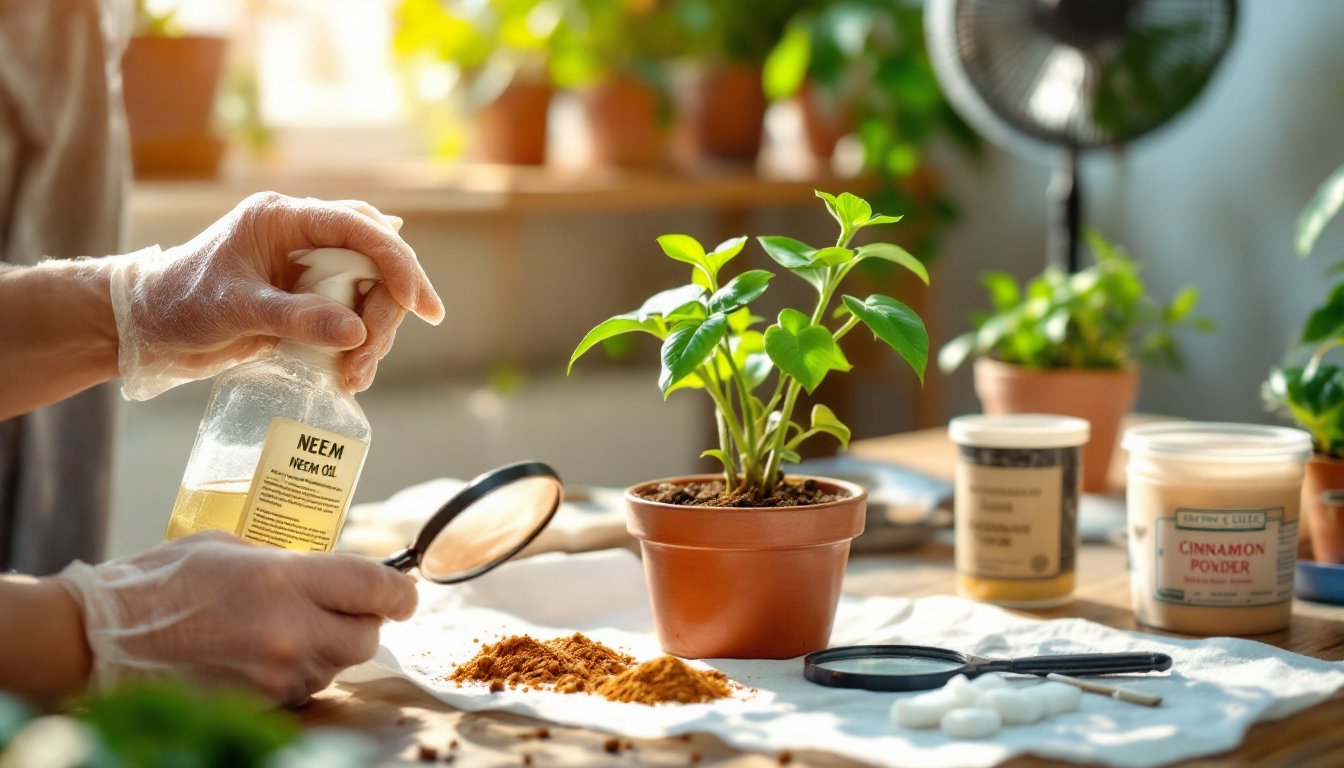
To diagnose the problem, inspect the top inch of soil with a magnifying glass, check for webbing on leaves, and watch for flying insects near the plant when watered. Yellow, wilting leaves and slow growth even though proper light and feeding often point to pest damage rather than other issues.
Natural Methods to Eliminate Plant Bugs
Soil Drenching and Watering Techniques
One of the simplest strategies is to disrupt the pest lifecycle through careful watering. Let the top inch of soil dry out between waterings, most fungus gnat larvae need constant moisture to survive. This alone can cut infestations significantly within 1-2 weeks.
For active infestations, use a soil drench with water and insecticidal soap or neem oil. Mix according to product instructions (typically 1-2 tablespoons per gallon) and water the soil thoroughly until it drains from the bottom. The liquid kills insects on contact and saturates the root zone. Repeat every 5-7 days for three applications to catch newly hatched larvae.
Beneficial nematodes (microscopic organisms) are another natural option. Mix them into the top inch of soil: they hunt soil-dwelling pest larvae. They work best in consistently moist soil, so this method pairs well with plants that like it damp.
Cinnamon powder sprinkled on soil surface deters some pests and prevents fungal issues, a mild but useful add-on. More aggressive natural treatments include spinosad (derived from soil bacteria), which kills soft-bodied insects but breaks down quickly in sunlight.
When using any drench or spray indoors, wear gloves and work near a window or fan. Even natural products can irritate skin and eyes.
Chemical and Commercial Treatment Options
If natural methods aren’t controlling the problem after two weeks, chemical treatments offer faster results. Imidacloprid-based granules (sold under brand names like Bayer Advanced) dissolve into soil and are absorbed by plants, making them toxic to chewing and sucking insects for weeks. They’re very effective for fungus gnats and mites, though effectiveness varies by regional pest resistance.
Pyrethrin sprays (synthetic versions of compounds from chrysanthemum flowers) kill adults on contact. They work well indoors because they break down quickly with light exposure. Apply weekly until pests disappear.
Horticultural oils coat soft-bodied pests and disrupt respiration. They’re less toxic than synthetic insecticides but can damage sensitive plants, test on a small leaf first.
Always read the label carefully. Some products are safe only on ornamental plants, not edible herbs. Application rates matter too: more isn’t better and can harm roots or foliage.
Wear nitrile gloves, avoid inhaling spray mist, and apply in a well-ventilated space, a bathroom with the door closed and window open works well. Store treatments in their original labeled containers, away from children and pets. If a plant is heavily infested and chemically treated, move it away from others until the infestation is fully cleared.
Prevent Future Infestations
Preventing reinfestation requires attention to three things: soil quality, watering habits, and plant hygiene.
Use fresh, sterile potting mix when repotting. Bag mixes sold in stores are heat-treated to kill pests and pathogens. Garden soil or compost from outdoors might harbor dormant pest eggs, avoid it indoors unless absolutely certain of the source.
Water carefully: most pest larvae thrive in waterlogged conditions. Check soil moisture with a finger before watering. If the top inch is still moist, wait a day or two. Use pots with drainage holes and empty saucers after 15 minutes, standing water is a pest’s dream.
Quarantine new plants for at least a week before placing them near established ones. Many home gardeners bring infested plants into their collection unknowingly. Inspect leaf undersides, stems, and soil surface closely.
Keep dead leaves, old flowers, and decaying stems removed from the soil surface. They’re breeding grounds for fungus gnats. Wipe leaf dust with a damp cloth monthly, healthy leaves spotted early catch pest problems sooner.
Improve air circulation: a small fan on low speed discourages fungus gnats and mites. Don’t crowd plants together: spacing them out reduces pest populations spreading plant-to-plant.
When to Repot and Refresh Your Plant
A complete soil change is the nuclear option, it works but requires a bit of care to avoid root shock. If a plant has been infested for months and treatments aren’t working, or if the soil itself looks compressed or foul-smelling, repotting is justified.
Choose a container the same size as the current pot or one size up (no more than 1-2 inches larger in diameter). Carefully remove the plant, gently tease apart compacted roots with your fingers, and discard the old soil entirely, don’t reuse it, even if it looks fine.
Rinse the pot and drain holes with hot water. Refill with fresh, bagged potting mix. Water lightly and place the plant in bright indirect light for a few days while roots adjust. Avoid fertilizing for at least 4-6 weeks: the new soil typically contains nutrients.
For heavily infested plants, you can also trim off heavily damaged roots (they’ll look soft and brown) before repotting. Don’t panic if some root loss occurs: healthy plants bounce back. Monitor the plant for the next few weeks, pest larvae may take time to completely disappear, so remain vigilant even after repotting.
Conclusion
Getting rid of bugs in indoor plant soil is manageable with a combination of identification, treatment, and prevention. Start with the simplest approach, let soil dry slightly and monitor, then escalate to drenches, neem oil, or spinosad if needed. Chemical treatments work faster but should be a second step, not the first. The key is catching infestations early, staying consistent with treatment (usually 2-3 applications), and addressing the root causes: overwatering and poor air circulation. With these strategies in place, the chance of a recurring infestation drops dramatically, and indoor plants can thrive pest-free for years.