
Table of Contents
ToggleNot every room gets a south-facing window or hours of direct sunlight. Offices, bathrooms, basements, and interior corners of homes are often dim, yet they’re the places where a bit of green makes the biggest difference. Low-light indoor plants thrive where other species struggle, turning shadowy corners into living, breathing spaces without special lighting setups. Whether someone’s dealing with a workspace that barely sees daylight or a rental with limited window placement, the right low-light plants can survive and actually grow in those conditions. They’re not just possible: they’re practical, attractive, and often forgiving of inconsistent waterers.
Key Takeaways
- Best indoor low-light plants like pothos, snake plants, and ZZ plants thrive in dim offices, bathrooms, and interior corners without requiring special lighting equipment.
- Overwatering is the leading cause of failure for low-light plants—check soil moisture before watering and allow soil to dry between waterings to prevent root rot.
- Pothos and snake plants are nearly indestructible beginner-friendly options that tolerate inconsistent watering, while ZZ plants offer a more refined architectural look for neglected corners.
- Low-light plants improve air quality, add visual interest, and create calm in sterile spaces while being more forgiving than high-light varieties for busy households.
- Match plants to actual light conditions—north-facing rooms and spaces 5+ feet from windows qualify as true low-light—and rotate monthly to encourage balanced growth.
Why Low-Light Plants Are Essential for Any Home
Low-light plants solve a real problem: interior spaces don’t always cooperate with a plant parent’s hopes. Modern homes and offices have layout constraints, shaded sides, and small windows that simply don’t provide the bright, indirect light most houseplants prefer. Rather than fighting those conditions or giving up on greenery, low-light varieties adapt to what’s actually available.
These plants improve air quality, add visual interest, and create a sense of calm in spaces that might otherwise feel sterile or cold. They’re also forgiving, many tolerate irregular watering and variable humidity better than high-light plants, making them ideal for busy households or new plant owners. The key is choosing plants suited to your specific light conditions, not shopping by aesthetics alone and hoping they’ll survive in a corner.
Pothos: The Ultimate Low-Light Trailing Plant
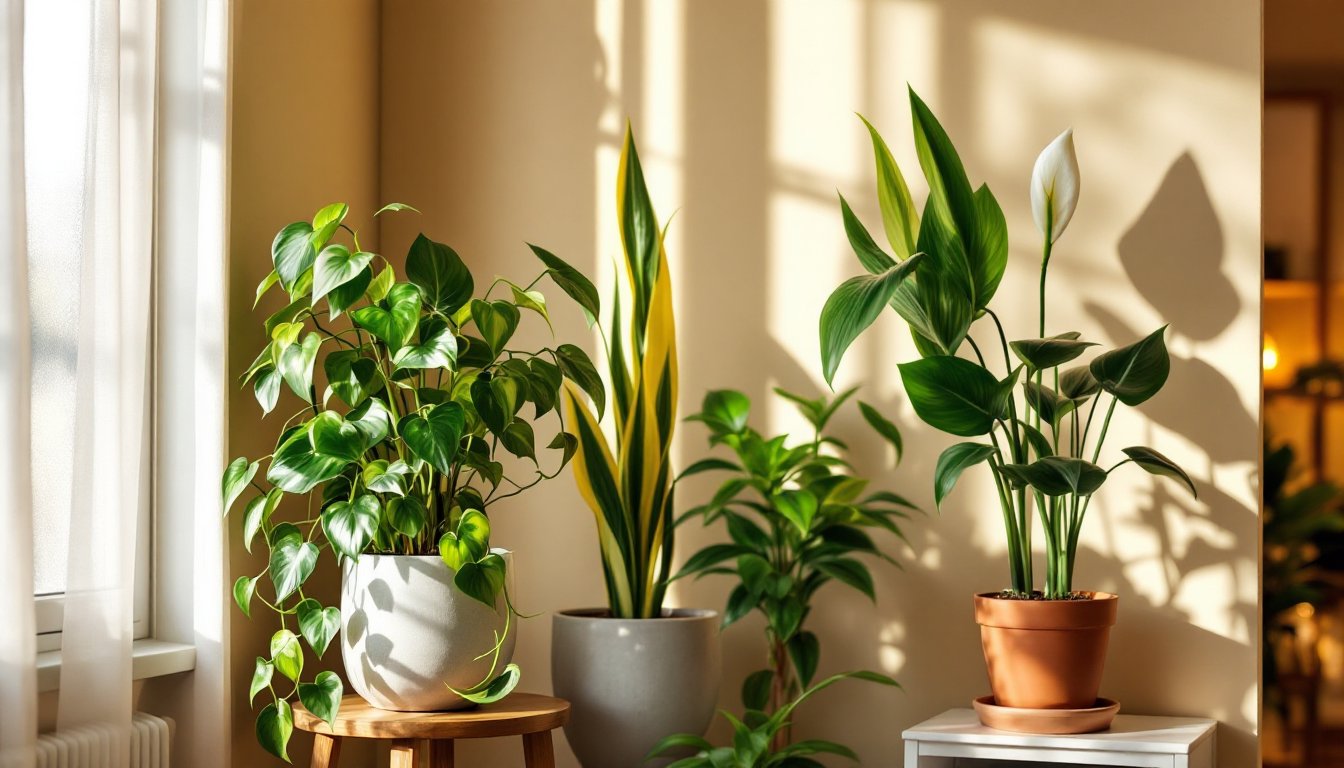
Pothos (also called Devil’s Ivy) is arguably the most reliable low-light plant available. It thrives in indirect, dappled, or even fluorescent office lighting, making it perfect for desks, shelves, or hanging baskets in dim rooms. The plant produces heart-shaped leaves on trailing vines that can reach several feet if left unpruned, or stay compact with regular trimming.
Why it works: Pothos grows steadily in low light and tolerates inconsistent watering better than many houseplants. It’s nearly impossible to kill, though overwatering is still its main enemy. Allow soil to dry between waterings, stick a finger 1 to 2 inches into the pot: if it’s moist, wait another few days.
Pothos comes in solid green varieties or variegated (mottled white or golden) types. Both perform equally well in low light, though variegated versions may lose some color intensity with less light. It’s a solid starting point for anyone doubtful about their plant-keeping abilities.
Snake Plant: Stylish, Durable, and Nearly Indestructible
Snake plants (Sansevieria) are structural, striking, and practically indestructible in low-light conditions. Their upright, sword-like leaves come in solid green, variegated yellow-and-green, or silvery varieties, fitting seamlessly into modern, minimalist, or eclectic décor. They reach 2 to 4 feet tall depending on the variety and look equally good as floor plants or on shelves.
Why it works: Snake plants store water in their leaves and can tolerate weeks of neglect without complaint. In low light, they grow more slowly than in bright conditions, which actually works in favor of people who don’t want aggressive, fast-growing plants. Water sparingly, only when soil is completely dry. Overwatering causes root rot, the main reason these plants fail.
Snake plants also improve air quality, removing toxins like formaldehyde and benzene. They’re genuinely hard to harm and require minimal maintenance beyond occasional watering. If someone’s skeptical about keeping anything alive, this is the plant to prove them wrong.
ZZ Plant: Low Maintenance Elegance for Dim Corners
ZZ plants (Zamioculcas zamiifolia) offer a more polished, architectural look than pothos or snake plants. They have glossy, compound leaflets arranged along upright stems, creating an almost tropical appearance even though their toughness. ZZ plants grow 2 to 3 feet tall indoors and are slow-growing, so they maintain size without constant pruning.
Why it works: ZZ plants tolerate low light remarkably well and are even more drought-tolerant than snake plants. They prefer to dry out between waterings and can go 3 to 4 weeks without water in cool conditions. Their slow growth and minimal needs make them excellent for offices or corners that get forgotten in busy schedules.
One note: ZZ plants contain oxalates and can irritate skin or stomachs if ingested, so they’re best kept away from pets and small children. The trade-off is a genuinely elegant plant that looks intentional and designed, not just “something green stuck in a corner.”
Philodendron and Peace Lily: Best for Focused Care
Philodendrons come in trailing (similar to pothos) and climbing varieties, with heart-shaped or split leaves depending on type. Peace lilies (Spathiphyllum) have glossy, deep-green foliage and distinctive white spathes (modified leaves that look like flowers). Both thrive in low to medium indirect light and are more visually refined than trailing vines.
Why they work: Philodendrons are nearly as forgiving as pothos but with slightly more personality in their leaf shape and size. Larger-leafed types like Philodendron Selloum make bold statements in dim corners. Peace lilies perform the same low-light trick but add the bonus of white blooms periodically, giving a sense that something’s actually happening with the plant.
Both prefer consistently moist (not wet) soil, which means checking moisture more often than with pothos or snake plants. Peace lilies notably wilt dramatically when thirsty, which actually serves as a built-in watering signal, once droopy, they perk back up within hours of watering. Philodendrons are less melodramatic but still indicate when they need water. Neither should sit in standing water or soggy soil.
Essential Care Tips for Thriving Indoor Low-Light Plants
Watering is the most common mistake. Low-light plants grow slower and use less water than sun-loving plants. Overwatering kills them faster than underwatering. Always check soil moisture before adding water: most low-light varieties prefer to dry out slightly between waterings. Use pots with drainage holes to prevent standing water.
Container size matters. A pot only slightly larger than the root ball is ideal: excess soil holds moisture longer and increases rot risk. As plants grow, pot up gradually, moving from a 4-inch to a 6-inch pot, not jumping straight to an 8-inch.
Humidity helps but isn’t critical. Low-light plants usually tolerate average indoor humidity. If leaves look dusty, wipe them gently with a damp cloth to improve light absorption. Misting is optional and won’t make or break plant health.
Rotate plants monthly. Even in low light, plants lean toward available light sources. Rotating every 4 weeks encourages more balanced growth. Fertilize lightly during growing season (spring and summer) with a balanced, diluted fertilizer: in winter, skip feeding or use half strength. Slow growth means slow nutrient needs.
Choose the right light context. North-facing rooms, offices with fluorescent lights, or spaces 5+ feet from windows are true low-light. Spaces near a window with sheer curtains or 3 to 5 feet from an unobstructed window are “medium, indirect light.” Match plants to actual conditions, don’t guess.
Conclusion
The best low-light indoor plants aren’t a consolation prize, they’re practical, attractive solutions for real living spaces. Pothos, snake plants, ZZ plants, philodendrons, and peace lilies all thrive where sunlight is scarce, transforming dim corners into living, breathing parts of a home. Start with one, learn its rhythms, and expand from there. Low-light plant success hinges on honest assessment of available light, proper watering discipline, and choosing plants matched to those actual conditions, not Instagram dreams.