
Table of Contents
ToggleCat owners know the struggle: you want greenery in your home, but many popular houseplants are toxic to felines. Low light indoor plants safe for cats solve this problem elegantly. They fill dim corners and north-facing windows without the worry that your pet might nibble a leaf and end up at the vet. This guide covers seven proven species that thrive in shade while remaining completely non-toxic, plus practical care strategies for multi-pet households.
Key Takeaways
- Low light indoor plants safe for cats eliminate the risk of toxicity while bringing greenery to dim corners and poorly lit spaces in your home.
- Spider plants are the top choice for cat owners—they’re nearly impossible to kill, grow quickly, and are completely harmless if your cat nibbles on the leaves.
- African violets, prayer plants, calatheas, Boston ferns, and parlor palms all thrive in shade and are non-toxic, allowing you to add colorful or textured foliage throughout your home safely.
- Proper watering is critical in low-light conditions: underwater slightly rather than overwater to prevent root rot, and always use room-temperature water with drainage holes in pots.
- Elevate plant pots on stands or shelves to prevent curious cats from tipping containers or digging in soil, which is essential for maintaining a cat-safe indoor garden.
Why Low Light Plants Matter for Cat-Owning Households
Not every corner of your home gets bright, indirect light. Many living rooms, bedrooms, and hallways stay dim throughout the day, especially in older homes or those with limited window exposure. Standard houseplants like pothos and lilies thrive in these conditions but are highly toxic to cats, causing vomiting, diarrhea, and organ damage if ingested.
Low light indoor plants safe for cats eliminate this trade-off. These species evolved in forest understories where shade is the norm, so they’re comfortable with less sun. They’re also non-toxic, meaning if your cat takes a harmless nibble, there’s no emergency trip to the animal hospital. For households with curious kittens or older cats that still like to munch vegetation, this peace of mind is invaluable.
Spider Plant: The Cat-Proof Shade Champion
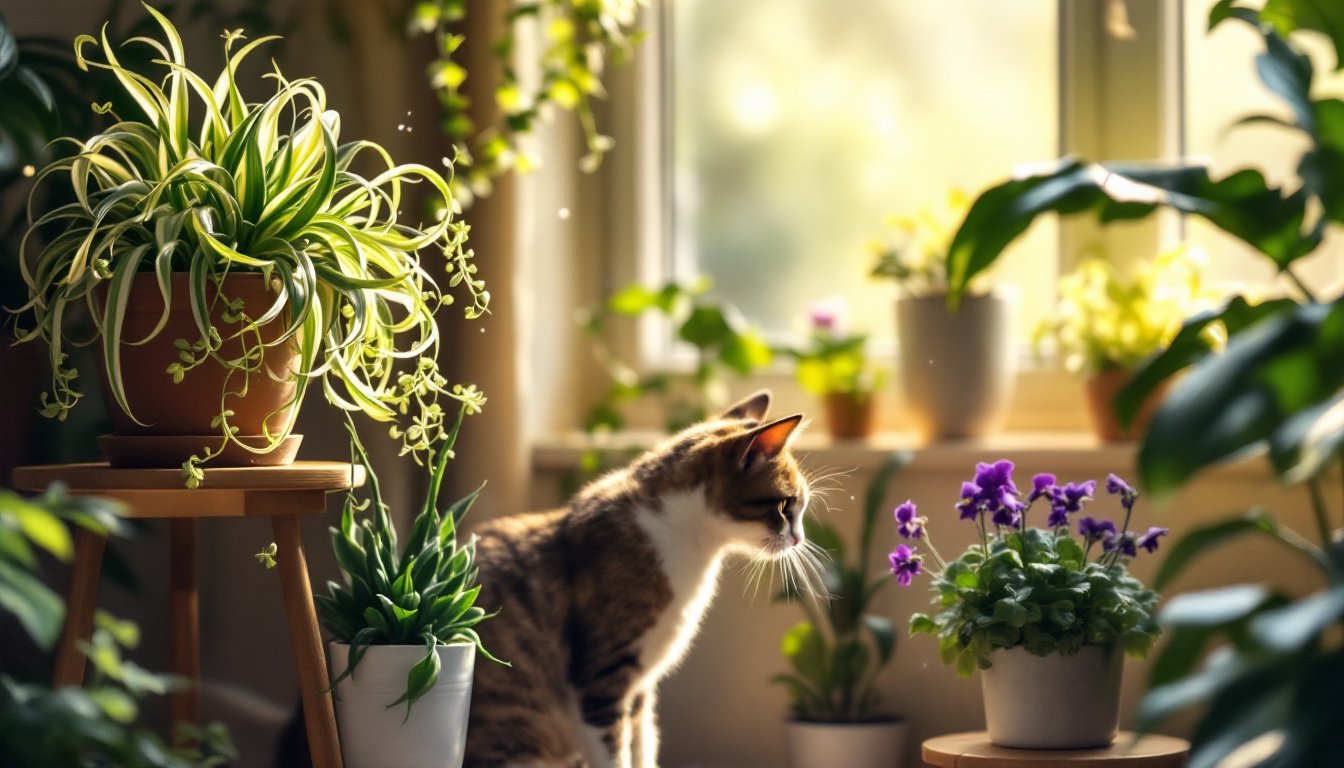
The spider plant (Chlorophytum comosum) is the gold standard for cat-safe, low-light living. It tolerates neglect, grows quickly, and cats find it completely harmless, even if they eat the leaves occasionally. Spider plants produce dangly runners with baby plantlets, which can appeal to playful cats, but pose no toxicity risk.
Spider plants adapt well to moderate or bright, indirect light but handle low-light corners effectively. They prefer evenly moist soil (not soggy) and benefit from occasional misting. The biggest advantage? They’re nearly impossible to kill. Even if your cat knocks it over, the plant rebounds quickly. Propagate runners into new plants for friends or fill other low-light spaces in your home.
African Violets and Calatheas: Colorful Low Light Alternatives
If you want flowering color in dim spaces, African violets deliver blooms in purples, pinks, and whites while staying completely non-toxic to cats. They prefer consistent warmth (65–75°F) and humidity, so place them away from drafts and cold windows. Water from below to avoid wetting the fuzzy leaves, which can rot if wet.
Calatheas (prayer plants’ cousins) offer bold, patterned foliage in deep greens with cream, pink, or red markings. They thrive in low to moderate indirect light and appreciate high humidity, a bathroom shelf or grouped with other plants works well. Both species are sensitive to tap water chemicals: use filtered or distilled water if your plant shows brown leaf tips. Neither is toxic to cats, making them ideal for adding visual interest to shaded spots.
Prayer Plants: Unique Movement and Cat Safety
Prayer plants (Maranta leuconeura) earn their name from their leaves, which fold up at night like hands in prayer. They’re striking, compact, and completely safe if your cat decides to investigate. Their low-growing habit makes them perfect for shelves or plant stands cats can’t easily reach, though even if they do, there’s zero toxicity risk.
Prayer plants need moderate to low light and consistently moist (but not waterlogged) soil. They prefer humidity and dislike cold drafts. Mist them occasionally or place the pot on a pebble tray filled with water to maintain moisture without root rot. Expect slow to moderate growth in lower light: that’s normal. Their unique leaf movement and compact size make them excellent conversation starters while keeping your cat safe.
Boston Fern and Parlor Palm: Lush Greenery Without the Risk
Boston ferns create soft, feathery foliage that fills space beautifully in low-light corners. They’re cat-safe and add humidity to your home, a bonus if your cat has respiratory sensitivity. The catch: they’re thirsty plants that need consistently moist soil and high humidity. Daily misting or placement near a humidifier prevents fronds from browning and curling.
Parlor palms (Chamaedorea elegans) are the opposite: low-maintenance and cat-safe. They grow slowly to 3–4 feet indoors and tolerate low indirect light without complaint. These palms prefer slightly moist soil but bounce back quickly if you forget to water occasionally. Both plants add visual dimension to dim spaces and pose zero risk if your cat brushes against them or nibbles a frond.
Care Tips for Low Light Plants in Homes With Cats
Low-light cat-safe plants still need the right environment to thrive. Place them in spots receiving some indirect light, an east or north-facing window, or a few feet back from any window. Avoid direct afternoon sun, which can scorch sensitive foliage.
Water according to each plant’s preference, but err on the side of slightly underwatered in low light, where evaporation is slower. Overwatering causes root rot faster in dimmer conditions. Water the soil, not the leaves (except when misting humidity-loving species). Use room-temperature water and ensure pots have drainage holes.
Repot every 12–18 months with fresh, well-draining potting soil. Cats may dig in soil out of boredom or litter-box confusion: place pots on elevated surfaces or use decorative plant stands to reduce temptation. Dust leaves monthly with a soft, damp cloth to maximize photosynthesis in low-light settings. Fertilize monthly during spring and summer with diluted, balanced liquid fertilizer: skip feeding in fall and winter when growth naturally slows.
Conclusion
Low light indoor plants safe for cats make it easy to bring greenery into every corner of your home without compromising your pet’s safety. Spider plants, African violets, prayer plants, calatheas, Boston ferns, and parlor palms all thrive in shade while remaining completely non-toxic. Choose species that match your light and humidity conditions, prioritize proper watering and soil drainage, and position pots where curious cats can’t easily tip them. With these strategies, you’ll enjoy a lush, cat-friendly indoor garden for years to come.