
Table of Contents
ToggleLarge indoor plants have become essential design elements in homes across the country, transforming bare corners into thriving ecosystems. Unlike small tabletop varieties, indoor large plants make an immediate visual impact, they anchor a room, improve air quality, and create a sense of calm that smaller greenery simply can’t match. Whether someone’s living in a sunlit loft or a modest apartment with one good window, there’s an indoor large plant suited to the space and their skill level. The key is understanding which varieties tolerate indoor conditions, how much light and water they actually need, and what to do when something goes wrong. This guide walks through the best indoor large plants for beginners, proven care strategies, and honest advice on which ones deliver real results without becoming a second job.
Key Takeaways
- Large indoor plants function as living furniture that improve air quality, reduce stress, and create visual depth without requiring a high level of expertise.
- Fiddle Leaf Fig, Monstera, and Rubber Plant are the best indoor large plants for beginners because they tolerate varied light conditions and bounce back from occasional neglect.
- Proper drainage with pots that have drainage holes is non-negotiable for large indoor plants, as waterlogged soil causes root rot within weeks.
- Light is the single biggest variable for success: most large plants need bright, indirect light from south or west-facing windows, while low light causes slow growth and leggy stems.
- Water quality and consistent moisture (allowing soil to dry slightly between waterings) matter more than watering frequency, and tap water minerals can cause leaf-tip browning over time.
Why Large Indoor Plants Elevate Your Home
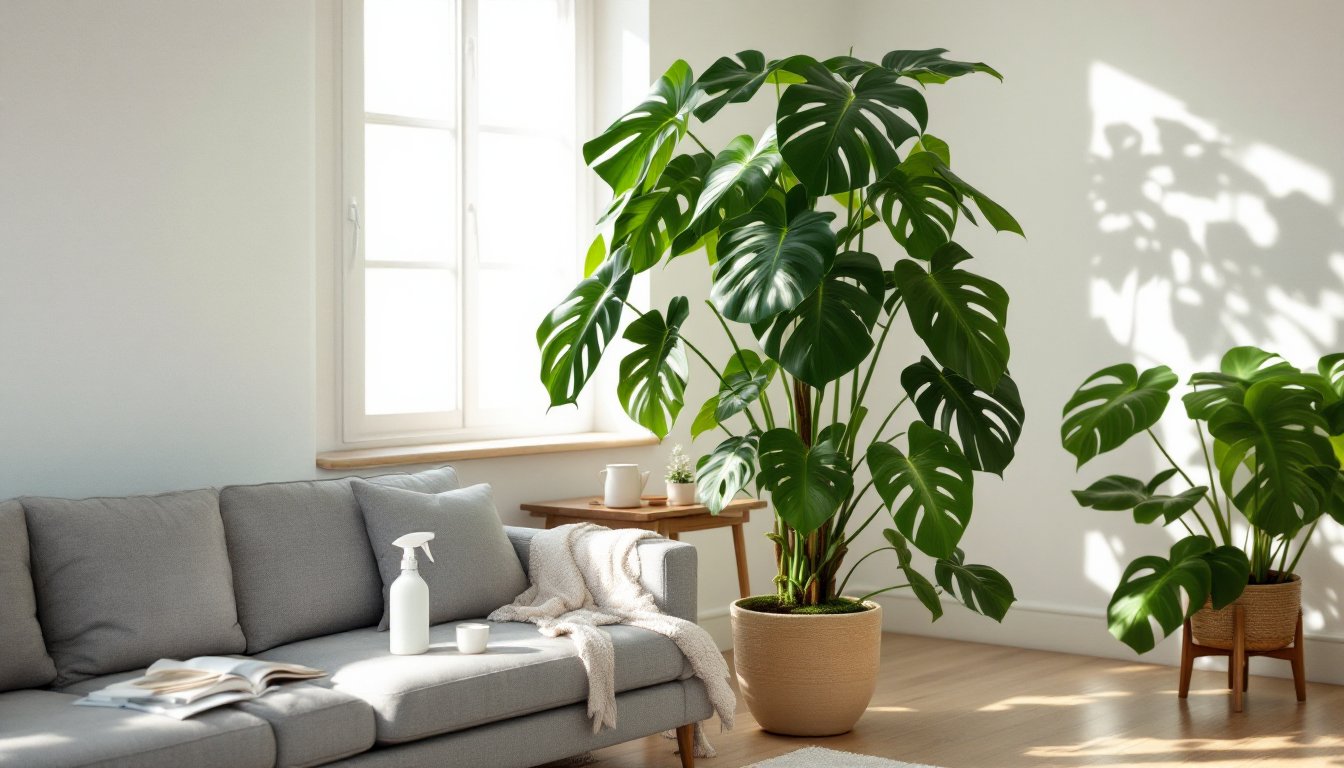
Large indoor plants function as living furniture. They fill vertical space, soften hard architectural lines, and anchor seating areas in ways that no framed poster can match. A 6-foot Monstera beside a sofa or a Bird of Paradise in a corner creates visual depth and makes a room feel intentional rather than sparse.
Beyond aesthetics, indoor large plants improve actual indoor air quality. They absorb carbon dioxide and release oxygen throughout the day, and some varieties, like philodendrons and rubber plants, scrub harmful compounds like formaldehyde from recirculated air. Research from NASA’s Clean Air Study confirmed that houseplants reduce indoor air pollutants, though they’re not a substitute for good ventilation.
There’s also a psychological lift. Studies show that people working in spaces with visible plants report lower stress and higher productivity. Unlike a decorative object, a plant grows and changes, giving a space a sense of living, breathing character. It’s the difference between decorating a room and creating an environment.
Top Indoor Large Plants for Beginners
Fiddle Leaf Fig and Monstera Varieties
The Fiddle Leaf Fig (Ficus lyrata) is one of the most popular large indoor plants for good reason: it grows tall and dramatic with minimal fussing. Mature plants reach 5 to 8 feet indoors, filling vertical space fast. The key to success is brightness, Fiddle Leaf Figs need bright, indirect light from an east or west-facing window. Direct afternoon sun can scorch the leaves: too little light causes slow growth and bare lower stems.
Watering is straightforward: let the top 1 to 2 inches of soil dry between waterings, then water thoroughly until drainage runs from the pot’s bottom. Overwatering causes root rot faster than any other mistake. Humidity helps (leaves love a weekly misting), but it’s not mandatory. The plant also appreciates being rotated 90 degrees every two weeks so it grows evenly toward the light source.
Monstera deliciosa and its cousin Monstera adansonii are equally forgiving and arguably more rewarding to watch. The split-leaf pattern (called fenestration) develops as the plant matures, especially in bright conditions. Monsteras tolerate lower light than Fiddle Leaf Figs and bounce back quickly from neglect. A medium-to-large Monstera reaches 6 to 10 feet indoors over a few years. They prefer to dry out slightly between waterings and aren’t fussy about humidity. Provide a sturdy moss pole or trellis, Monsteras climb in nature and do better with structural support as they get tall.
Bird of Paradise and Rubber Plants
Bird of Paradise (Strelitzia reginae) is the statement plant for those with patience and bright light. It’s taller and slower-growing than Fiddle Leaf Fig, reaching 4 to 6 feet indoors over several years, but the orange and blue flowers (when it blooms indoors, usually after 3 to 5 years) justify the wait. The plant demands bright light, south or west-facing windows are ideal. Without sufficient light, it grows lean and tall without flowering.
Bird of Paradise also prefers consistent moisture during the growing season (spring through fall) but dries out more between waterings in winter. It’s not difficult, just particular about light. For apartments without strong natural light, Bird of Paradise is a riskier choice: Monstera or Fiddle Leaf Fig is the safer bet.
Rubber Plant (Ficus elastica) is the underrated workhorse. It grows thick and full, not as tall as some varieties, but stockier, reaching 4 to 8 feet indoors depending on the cultivar. Red-tinged varieties like ‘Burgundy’ and variegated types like ‘Tineke’ add visual interest beyond plain green. Rubber Plants tolerate lower light than Fiddle Leaf Fig, making them suitable for east-facing rooms or spots a few feet away from a window. Water when the top 2 inches of soil feel dry: the plant actually performs better if slightly underwatered rather than babied. Minimal pruning keeps them bushy: without it, they trend toward leggy single stems.
Essential Care Tips for Thriving Large Plants
Drainage is non-negotiable. Every large indoor plant needs a pot with drainage holes at the bottom and a saucer or tray underneath to catch water runoff. A 6-inch or larger pot without drainage holes is a slow-motion death sentence: roots sit in waterlogged soil and rot within weeks. If a decorative pot doesn’t have drainage, use it as a cachepot: plant the large plant in a draining nursery pot, then tuck that pot inside the decorative one.
Light remains the single biggest variable. “Bright, indirect light” means light that doesn’t directly hit the leaves for hours on end. A north-facing window is typically too dim for most large plants: south and west-facing windows are strongest. If unsure, move the plant a few feet back from the window or filter direct sun with a sheer curtain. Lack of light causes slow growth, pale leaves, and leggy stems faster than any other mistake.
Water quality matters more than frequency. Tap water with high chlorine or minerals can build up in soil over time, causing leaf tips to brown. If that’s happening, water with filtered or left-to-sit overnight tap water, or switch to distilled. Most large plants prefer to dry slightly between waterings, not bone-dry, but not soggy. Stick a finger an inch into the soil: if it feels damp, wait another day or two.
Humidity is nice but not required. Misting leaves once a week helps plants that evolved in humid tropical forests, but most tolerate typical indoor humidity (30 to 50 percent) just fine. If leaves develop brown tips or edges, low humidity is rarely the culprit: it’s usually irregular watering, high salts in soil, or low light.
Acclimate new plants before moving them into their final spot. If a plant arrives from a nursery in low light and gets suddenly placed in a sunny window, it’ll drop leaves from shock. Spend a week gradually increasing light exposure. Similarly, when rotating plants or repotting, give them a few days to settle.
Repot in spring every two to three years, or when roots circle the pot’s drainage hole or the plant stops growing even though good light and water. Use well-draining potting mix, not garden soil, which compacts indoors. Move up one pot size (e.g., 10-inch to 12-inch), not two or three. Oversized pots hold too much water and invite root problems.
Fertilize during the growing season (March through September) with a balanced diluted liquid fertilizer (10-10-10 or similar) every four to six weeks. In winter, cut back or stop, the plant isn’t growing much and doesn’t need feeding. Over-fertilizing burns roots and causes salt buildup.
Pests are less common indoors than outdoors, but spider mites and mealybugs do show up on large plants, especially in low-humidity spaces. Check the undersides of leaves monthly. If pests appear, spray with neem oil or insecticidal soap (following label directions) every seven days for three weeks. Isolate the infested plant away from others to prevent spread.
Conclusion
Indoor large plants deliver immediate visual and environmental returns when matched to the right light and care routine. Fiddle Leaf Fig and Monstera varieties suit most bright homes, while Rubber Plant handles lower light gracefully. The honest truth: success depends far more on consistent watering, proper drainage, and realistic light assessment than on fancy fertilizers or fussy techniques. Start with one plant, master it, then expand. A thriving large plant in a home is worth far more than three struggling ones.